
No Single Score: Reconstructing Opera through Performance
If you open a certain cabinet in my parents’ house, you might find all of the books that my sisters and I read in school. For some well-known titles, you’ll find multiple editions of those books: take Shakespeare’s Romeo and Juliet. I count: a Bantam Classics edition (mine from middle school), a Folger Shakespeare Library edition (my sister’s from high school), and an Oxford Shakespeare edition (mine from college). For such a well-known work, even though the source material is about 430 years old, we have multiple modern editions that present different critical commentary and illuminate how different folios or manuscript sources have contributed to our current understanding of the text. In other words, even a work as familiar as Romeo and Juliet does not exist in just one fixed form.
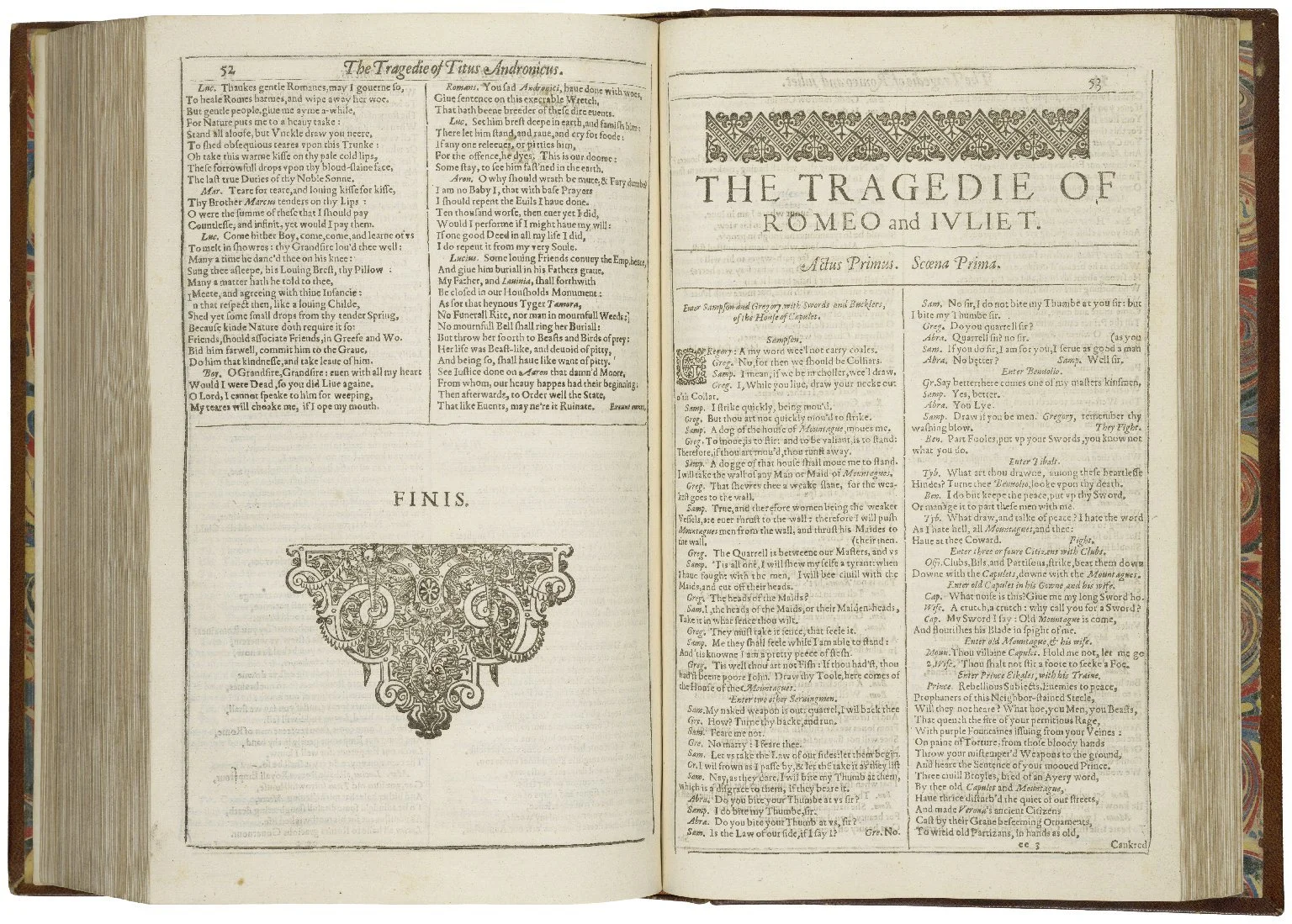
The “First Folio” of Shakespeare, published in 1623. A folio is a type of early book printing in which each sheet is folded once to create four pages. Four major folios from the 1600s serve as key source texts for Shakespeare’s plays, though they differ slightly from one another.
Likewise, if I glance at the bookshelf of music in my apartment, I can find four editions of Beethoven’s piano sonatas, three editions of Mozart’s piano sonatas, and three copies of Chopin’s etudes. I’ve collected these over the years, as each edition offers a different lens into these works and provides different utility to me as a performer. Take the Mozart sonatas: one well-worn, dog-eared copy published by Schirmer (and inherited from my childhood piano teacher) contains the markings and scribblings that my teachers and I wrote in when I was young. The music printed in my Kalmus edition is bare – in two ways. First, I’ve never written on it, but the printed music itself contains no fingerings, no editorial dynamics, and no critical commentary: it is just Mozart’s notes on a page. This is valuable for sightreading practice or quick revisiting of old favorites, because nothing gets in the way of the performer quickly scanning the music as they play. But the Kalmus only presents one version of Mozart’s notes: my Henle edition contains a myriad of critical commentary, offering insight about where different manuscript sources of Mozart’s work differ from one another – information-dense for a young student or casual reader, but incredibly valuable to a performer studiously preparing a performance of these works.
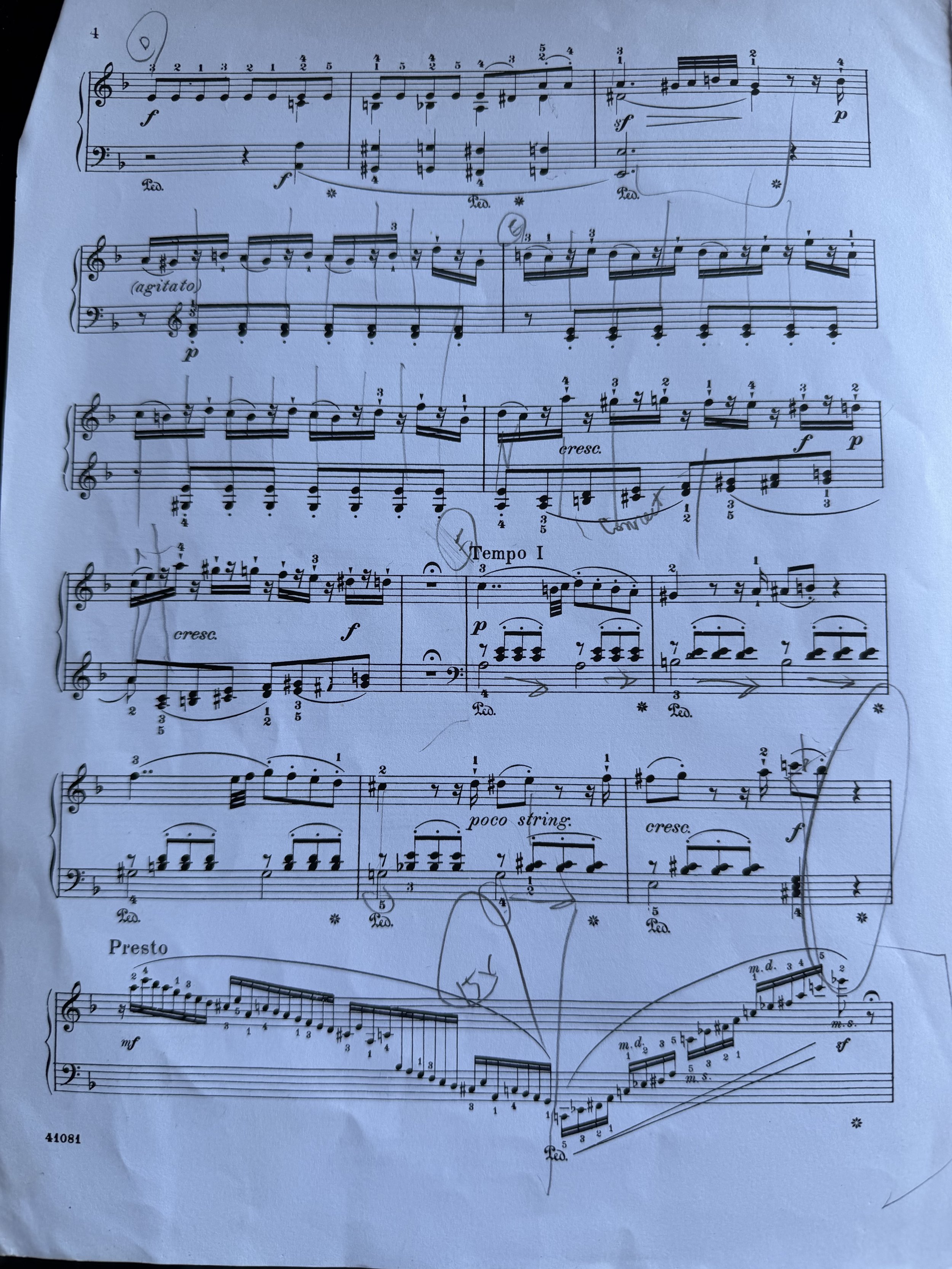
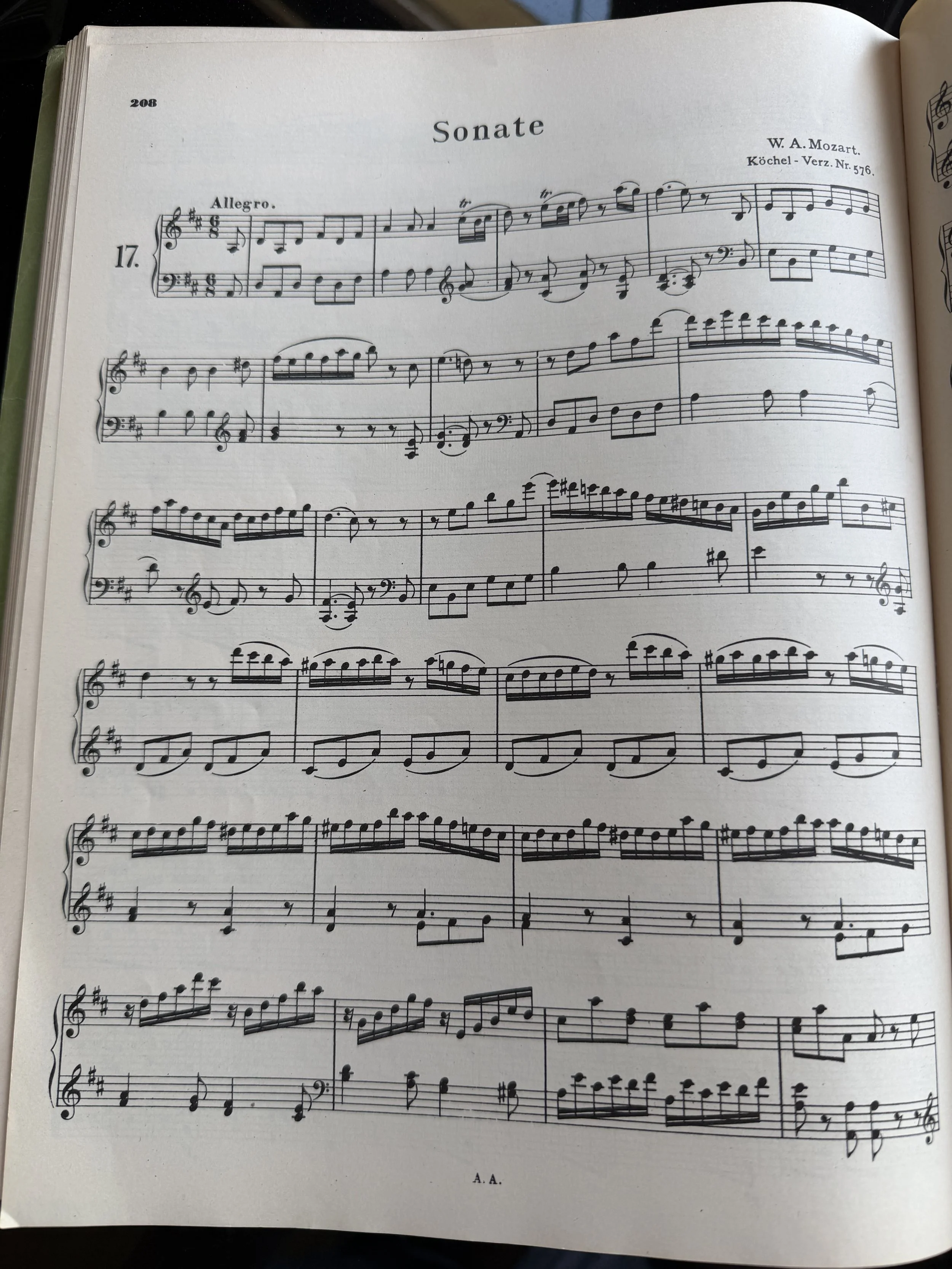
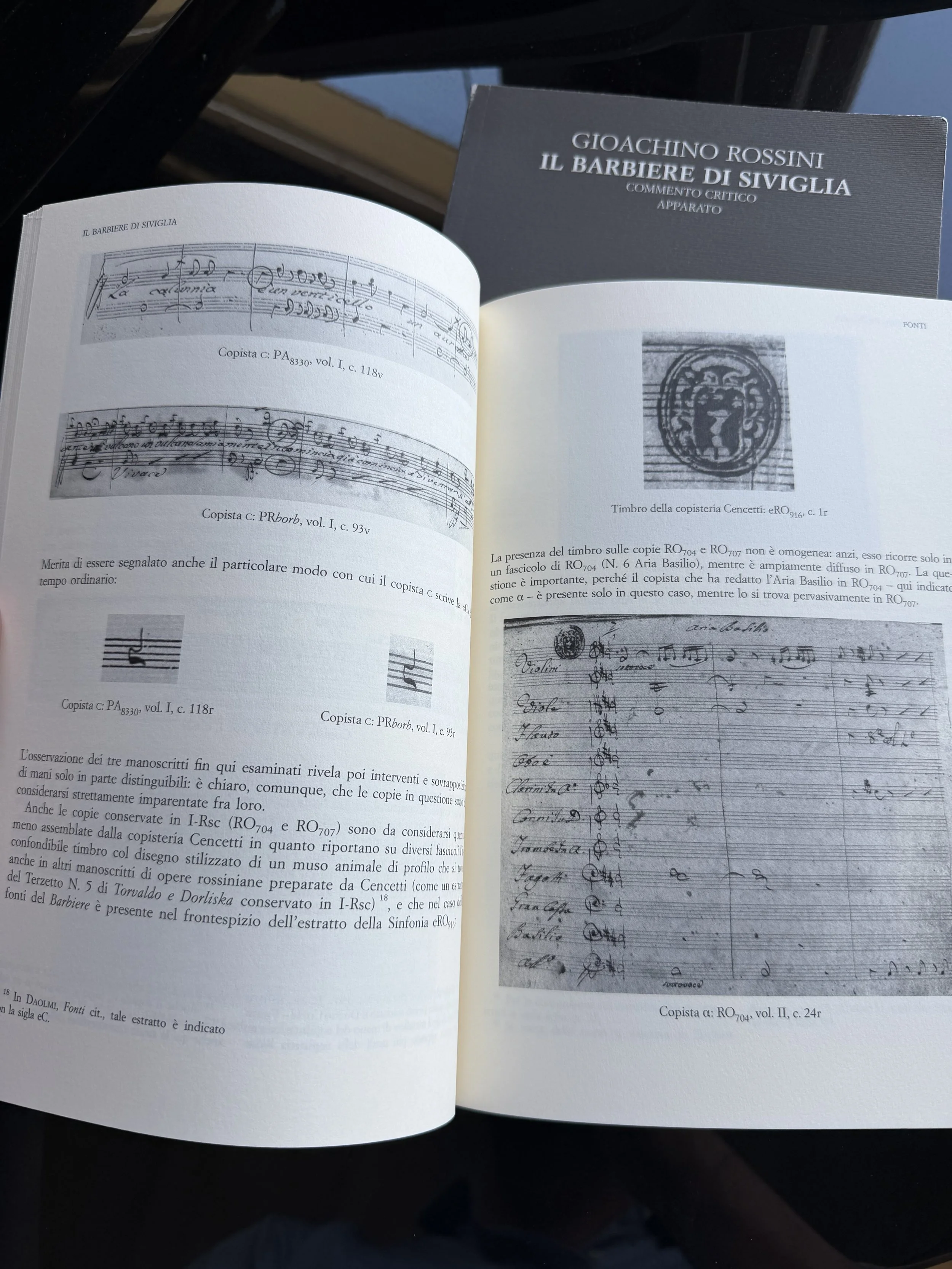
Images from left to right:
1. A well-scribbled and heavily edited page from Mozart’s D Minor Fantasy.
2. A clean, transparent printing of Mozart’s D Major Sonata (KV. 576) in the Kalmus edition
3. The Mozart Henle edition pales in comparison to the critical commentary that came with score I used to conduct PCO’s The Barber of Seville in 2025 – which came with two whole volumes of notes… all in Italian!
There is an incentive for publishers and editors to undertake the massive amount of work required to create a critical edition of Shakespeare’s Romeo and Juliet or the Mozart sonatas, as these volumes can be printed for mass distribution and sold to a wide audience. Some widely performed operas, like Mozart’s Le nozze di Figaro, have multiple critical editions, produced by teams of scholars working for years. For other widely performed operas, like some by Verdi and Puccini, the composer was directly involved in producing the first published edition, which still meets modern performance standards – so the production of a critical edition isn’t as necessary. But for many operas – including both mainstage productions in Park City Opera’s upcoming 2026 Summer Season, Aaron Copland’s The Tender Land and Charles Gounod’s Roméo et Juliette – the lack of a critical edition presents unique challenges for performers as we undertake a production of the work.
What does that mean in practice? Crucially, small details in a score can lead to massive differences in performance and interpretation. An opera’s libretto contains a myriad of opportunities for error – a wrong verb tense in French, a missing comma that alters grammatical meaning, or a slightly changed word introduced by an overzealous editor. In a score, a missing dynamic mark in a single part can change a conductor’s sense of balance across an entire passage. Missing articulation markings might obscure the composer’s intentions for how a phrase should be performed. Inconsistencies between orchestral parts, or errors within them, might befuddle the instrumentalists performing them. In my role as the conductor of these productions, a key part of my preparation is a deep examination of the score, complete with a healthy dose of curiosity (and skepticism) and an eye for possible errors or inconsistencies.
One of the ways this work manifests in practice is in our production of Aaron Copland’s The Tender Land. There are two versions of The Tender Land: its original orchestration (for about 60 musicians), scored by Copland, and an orchestral reduction for 13 musicians produced by the American conductor and musicologist Murry Sidlin (and supervised by Copland).
PCO will be producing Sidlin’s reduction: it lends the opera a beautiful musical intimacy that matches the portrait of Midwestern domestic life in which the opera is set. Sidlin took many cues from the original version of Copland’s Appalachian Spring, which was scored for the same 13 instruments and mirrors a very similar musical style to The Tender Land.
Sidlin’s version of The Tender Land is not often performed, though, and his original handwritten score has never been typeset. We thus have the unique opportunity to encounter an opera through a handwritten document! Though it poses unique challenges, working with a handwritten score allows us to get closer to the human nature of the work itself. When errors or discrepancies in handwritten materials arise (as they almost inevitably will), we are able to closely examine Copland’s original orchestration, his vocal score, and earlier recordings to make our best judgment as to his intention for the work. I find this work incredibly rewarding: it’s one of the most exciting facets of performing lesser-known or less often performed music.
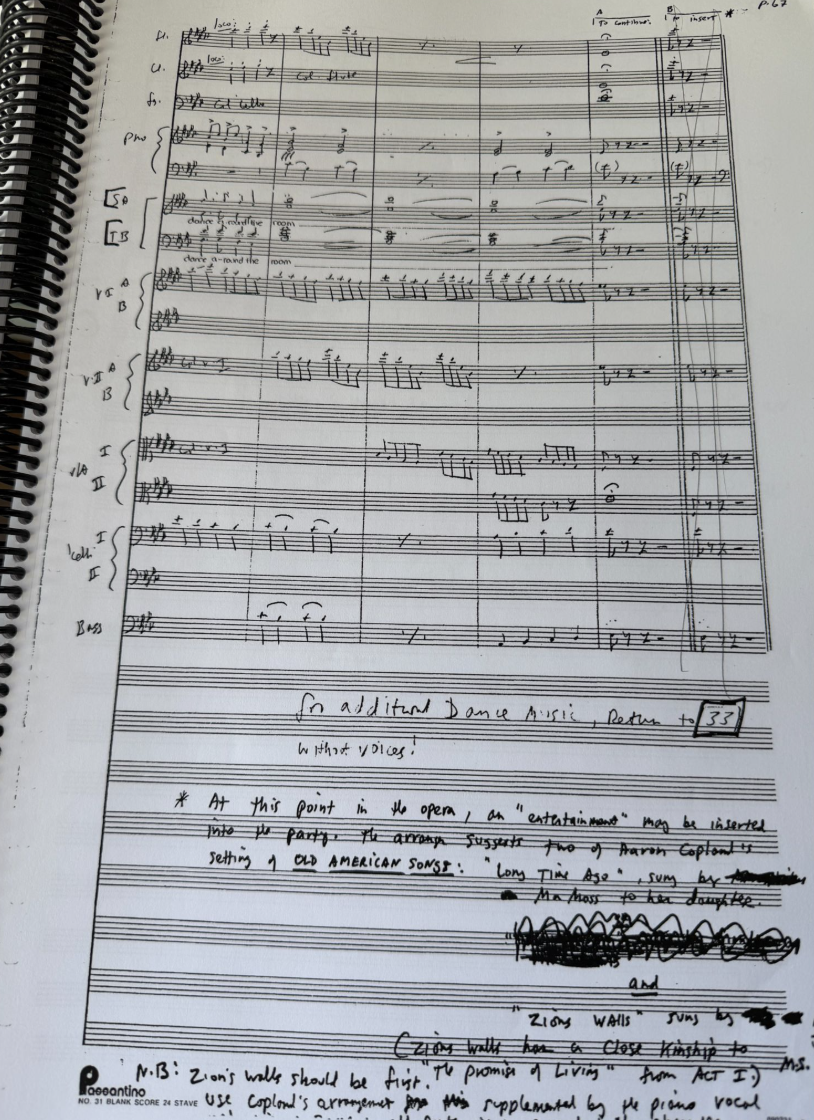
A page from the full score of The Tender Land, arranged by Sidlin.
On the other hand, working on Gounod’s Roméo et Juliette poses a different set of challenges. Composed for its 1867 premiere at the Théâtre Lyrique in Paris, it was published (on a printing press!) by Edition Choudens shortly afterward, and it quickly entered the canon of the operatic repertoire. The American publisher Kalmus later reprinted the Choudens edition, and then Schirmer, a third publishing house, published a vocal score based on the Kalmus reprint, which has been in circulation since then and remains the standard edition for singers performing the work.
The problem: the publication and republication of these editions has led to a kind of game of telephone across centuries, and small discrepancies emerge across editions. Any discrepancy between editions requires research: we are fortunate that a sizeable portion of Gounod’s manuscript score has been digitized and is available online courtesy of the Juilliard Library and Archives. But for the rest of the opera, discrepancies between editions require further research. If no answers are found, they ultimately require intuition from artistic leadership – decisions based on the rest of the opera, Gounod’s other works, past performance tradition, and the style in which the work exists (for Gounod, that of late-19th-century French grand opera).
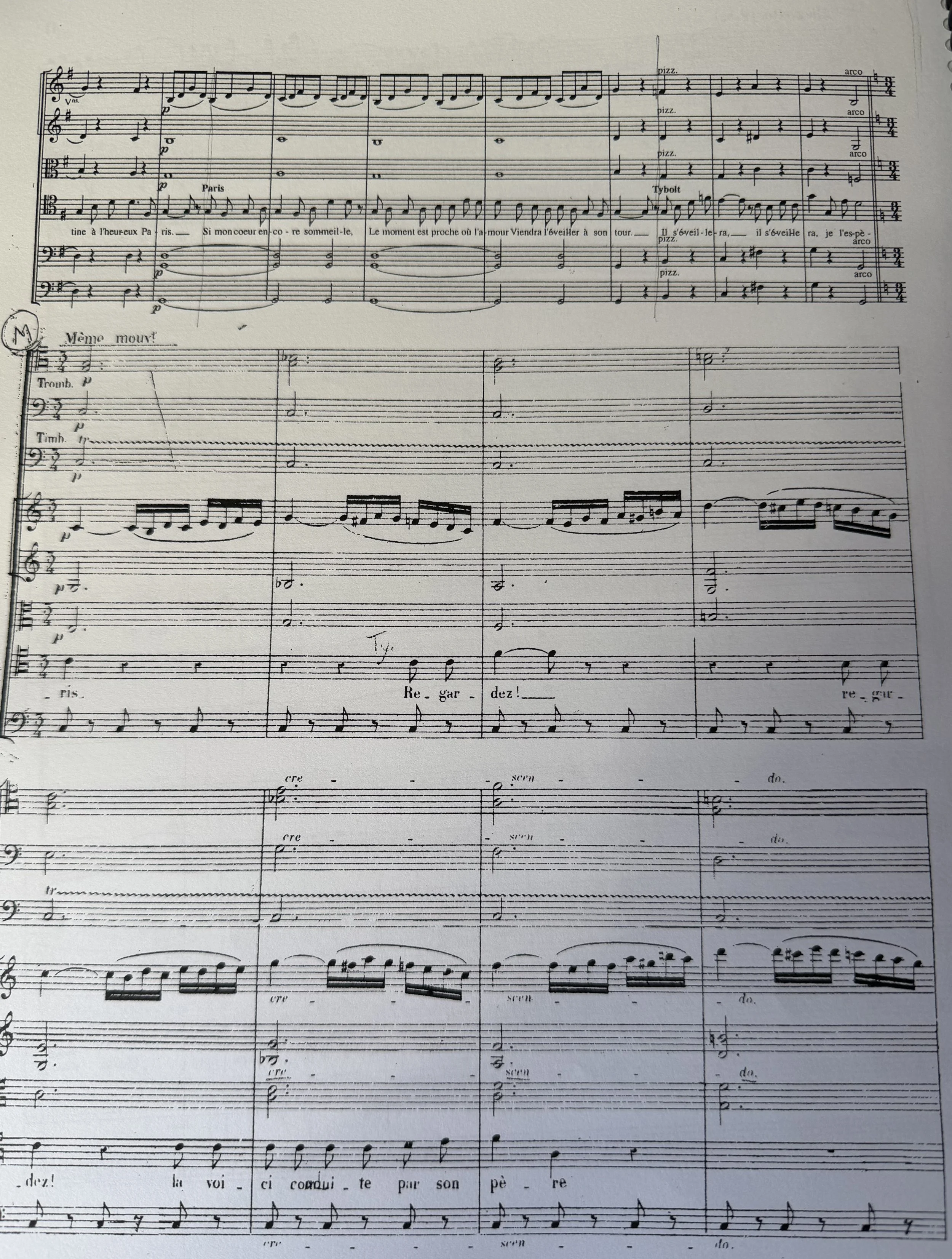
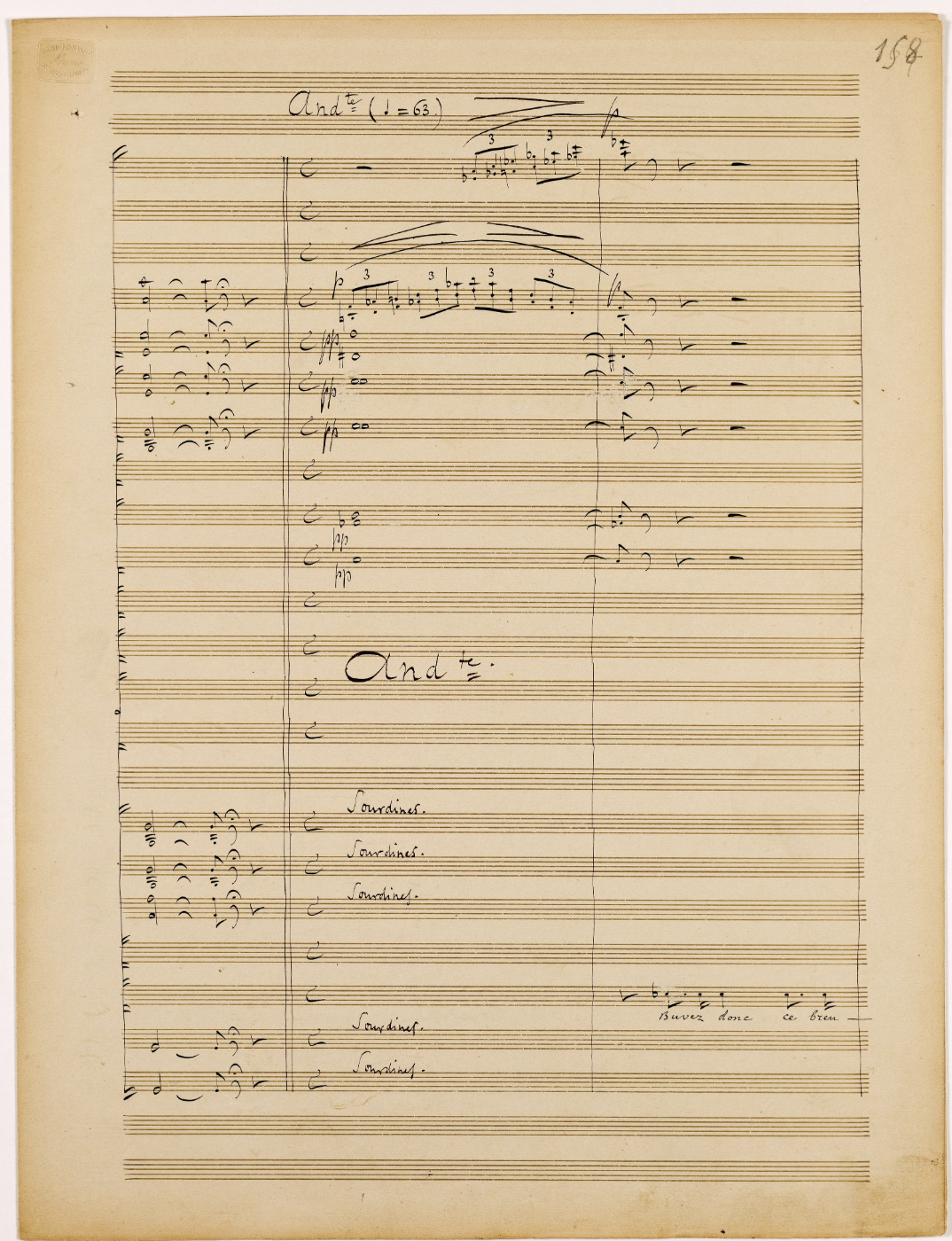
Images from left to right:
1. A page from the full score of Roméo et Juliette. Notice how the font and printing in the top third of the page differ from the bottom two-thirds: our music librarian, David Carp, has restored eight bars of music in the full score that had been accidentally omitted from the Kalmus edition, using the Schirmer edition as a reference!
2. A page from Gounod’s manuscript of Roméo et Juliette in the Juilliard archives. This is the first page of Frère Laurent’s aria, “Buvez donc ce breuvage”.
One facet of our work as operatic performers is that we are bearers of a performance tradition that goes back hundreds of years. Born out of this tradition, we often deeply value fidelity to the composer’s score – the “text” or “work” on which any individual performance of an opera is based. But “text” is complicated. Close examination of these works further humanizes them and reminds us that even the authors of our masterpieces were only human – and that each performance is, in some small way, an individual act of rediscovery.
