
The Case for Permanent Impermanence
Last August, audiences at Park City Opera descended a rather unremarkable staircase on Main Street and walked into a speakeasy. The lights were low and the space was cramped (or if you look on the bright side, sold out). And then, without much ceremony at all, an orchestra launched into the overture of Rossini’s The Barber of Seville just a few feet away.
What I can tell you is that nobody in the room was thinking about operatic tradition. Few had even bothered to consult their program notes, and some were still nursing a glass of “Bartolo’s Bitter Pill.” But, what everyone was doing, almost immediately, was paying attention. Not politely or dutifully, but eagerly.
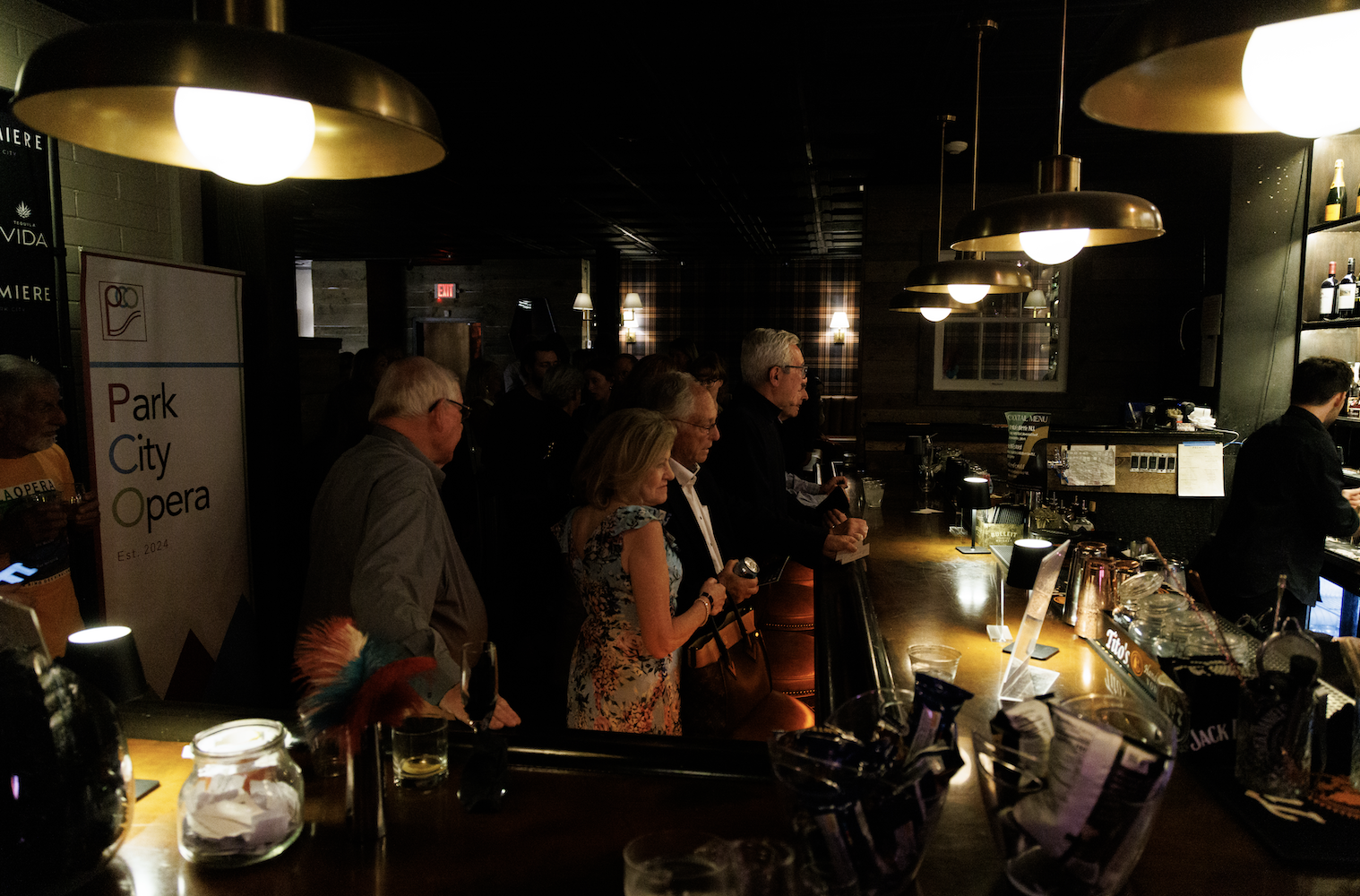
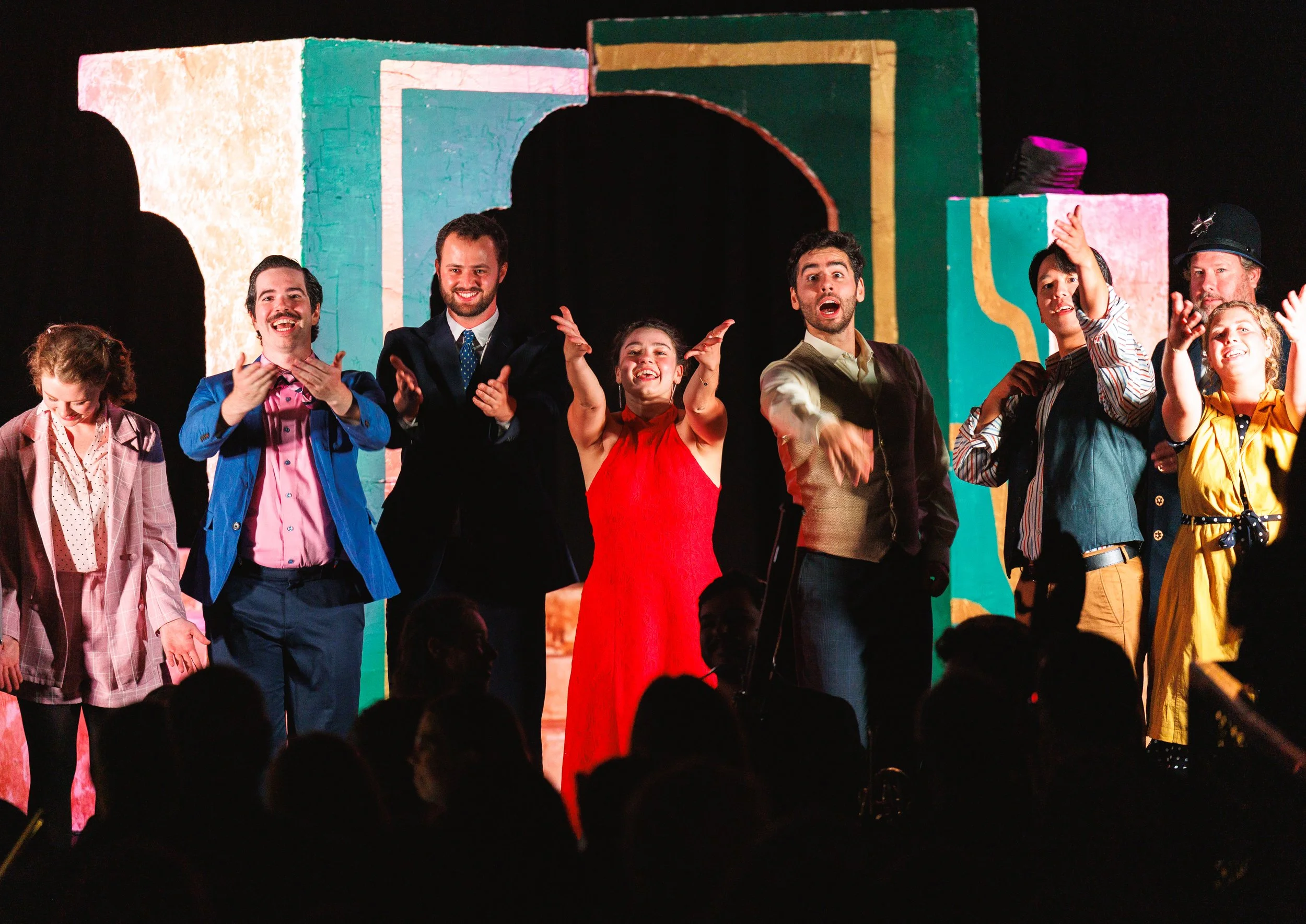
A peak inside Premiere Speakeasy before and after curtain call for Park City Opera’s The Barber of Seville.
The opera industry spends so much energy debating how to attract new audiences. Mostly, the conversation tends to orbit around the work itself: should we commission a new opera, present an updated staging, modernize the supertitles, or aim for a shorter run time? Yes. All worth doing at times, but these companies rarely spend time thinking about where they will stage their productions. Many of them have permanent, world-class venues! As a new company without a dedicated opera house, one question we were more attracted to was: does where you stage an opera change what opera is?
The answer, we believe, is yes, at every level. The choice of venue signals to audiences what kind of experience to expect before the first note. It determines who feels welcomed at the door (or at the field, for an outdoor performance!). On a deeper level, the places we perform start to shape artistic and dramaturgical choices. Where you put opera changes who encounters it, how they receive it, and what it means to them. Location isn’t decoration; it’s a choice.
This isn’t a new idea. Opera has always been shaped by place, and has always shaped the places where it’s performed in return. Consider France in the early 1800s. In the wake of the French Revolution and the social upheavals that followed, aristocratic audiences gave way to a newly empowered and increasingly urban middle class. Opera too adapted to meet the changing audience; what emerged in the late 1820s was grand opera: large-scale works combining music, drama, ballet, and historical narratives, designed to fill enormous stages and equally enormous ambitions. Opera changed because the audience attending it had changed.
The story runs deeper, though. In the decades that followed, Paris reimagined itself as a modern capital, and under Napoleon III’s urban reforms, cultural institutions like opera were consciously deployed to project a unified civic identity. At the center of this vision stood Palais Garnier.
Inaugurated in 1875, Palais Garnier was never simply a venue. It was a monument. Its grand staircase, vast foyers, and ceremonial circulation spaces transformed the act of attending the opera into a public ritual – the performance began the moment you arrived. Opera and city shaped each other: changing audiences pushed the art form toward grand spectacle, and grand opera, in turn, helped define the physical and cultural identity of Paris.
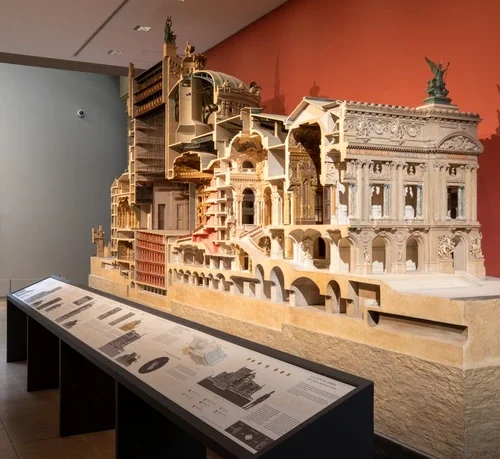
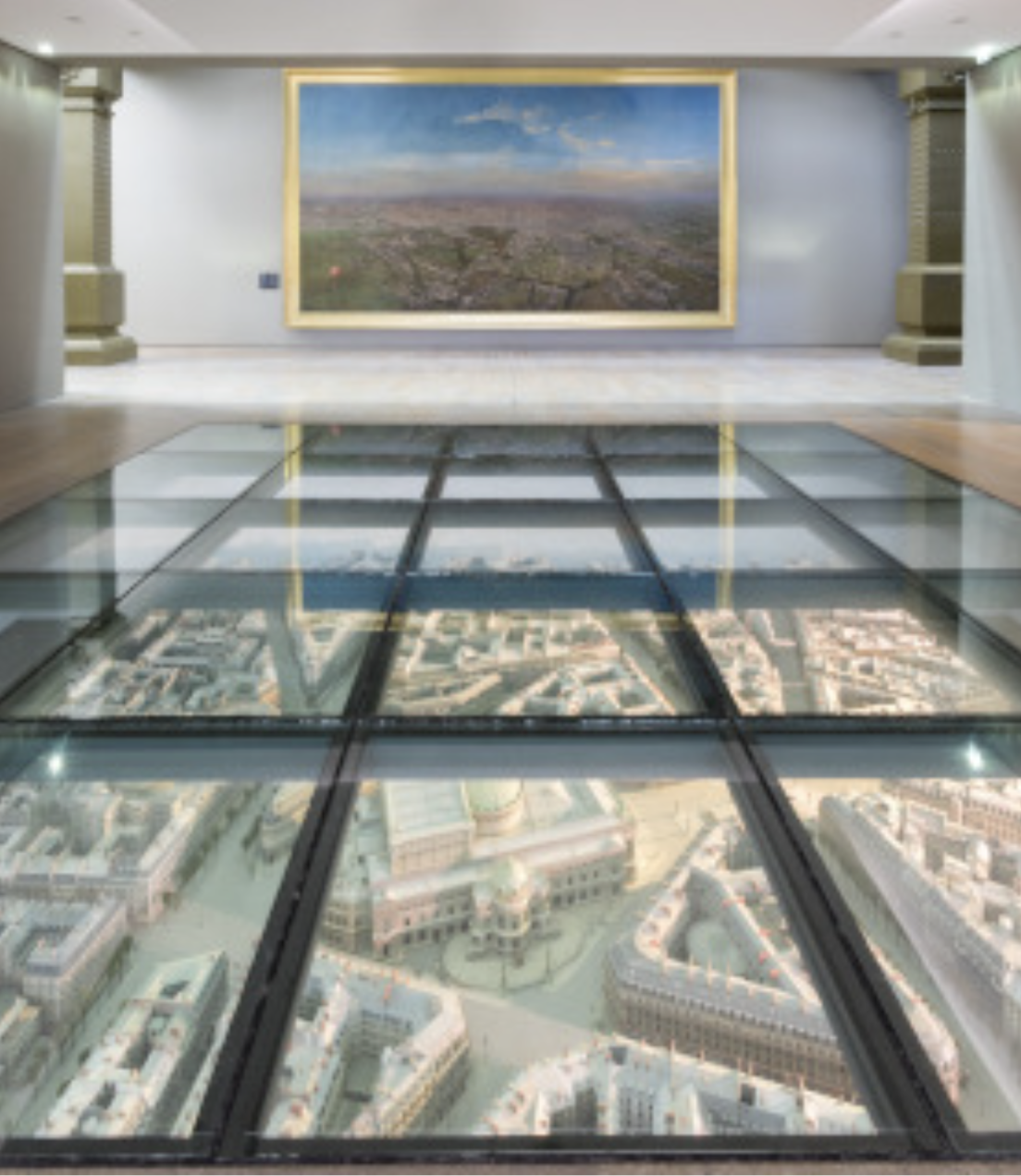
From a recent visit to Musée d’Orsay. On the left, a cross-sectional model of Palais Garnier, created originally for the museum in the 1980s. On the right, a glass floor over a model of Haussmann’s reconstruction of Paris.
What strikes me about this interaction between the history of opera and the history of a city isn’t the grandeur of it all, it’s the intentionality. The construction of the Palais Garnier was a deliberate statement about who opera was for, what it meant to attend, and how the building itself should make you feel. Those were, in a way, artistic decisions. They just happened to be made of marble.
This brings me back to the staircase on Main Street in Park City.
When we founded Park City Opera, we asked ourselves a version of the same question (admittedly, with different answers in mind). What does it mean to create opera for a place where there is no operatic tradition? Who should feel like this was made for them? Where (literally) should we start?
More than 50 performances later, our answer is that we don’t rely on any single place to answer these questions for us. We rely on dozens of venues ranging from galleries, outdoor patios and parks, greenhouses, restaurants and bars, and theaters to each carry their own meaning. A family that finds a concert hall an impossible environment for their wandering toddlers may find City Park to be their ideal Monday evening. For us, the architecture of access isn't only about ticket pricing or marketing language but also about whether the physical space itself sends the signal that you belong here.
We’ve found that venue choice also shapes the art we make. When you know your audience will be ten feet away, not two hundred, you cast differently. You choose repertoire that rewards closeness, where a shift in expression carries a different kind of dramatic weight. When you perform in a greenhouse surrounded by plants, you lean into the seasonality. When you perform in a speakeasy, you choose Rossini for comedy that thrives on proximity and (sometimes) chaos.
Moreover, when your performance spaces span the full social landscape of a town, you're not asking people to enter opera's world. You're entering theirs. And that asymmetry matters when it comes to attracting new audiences.
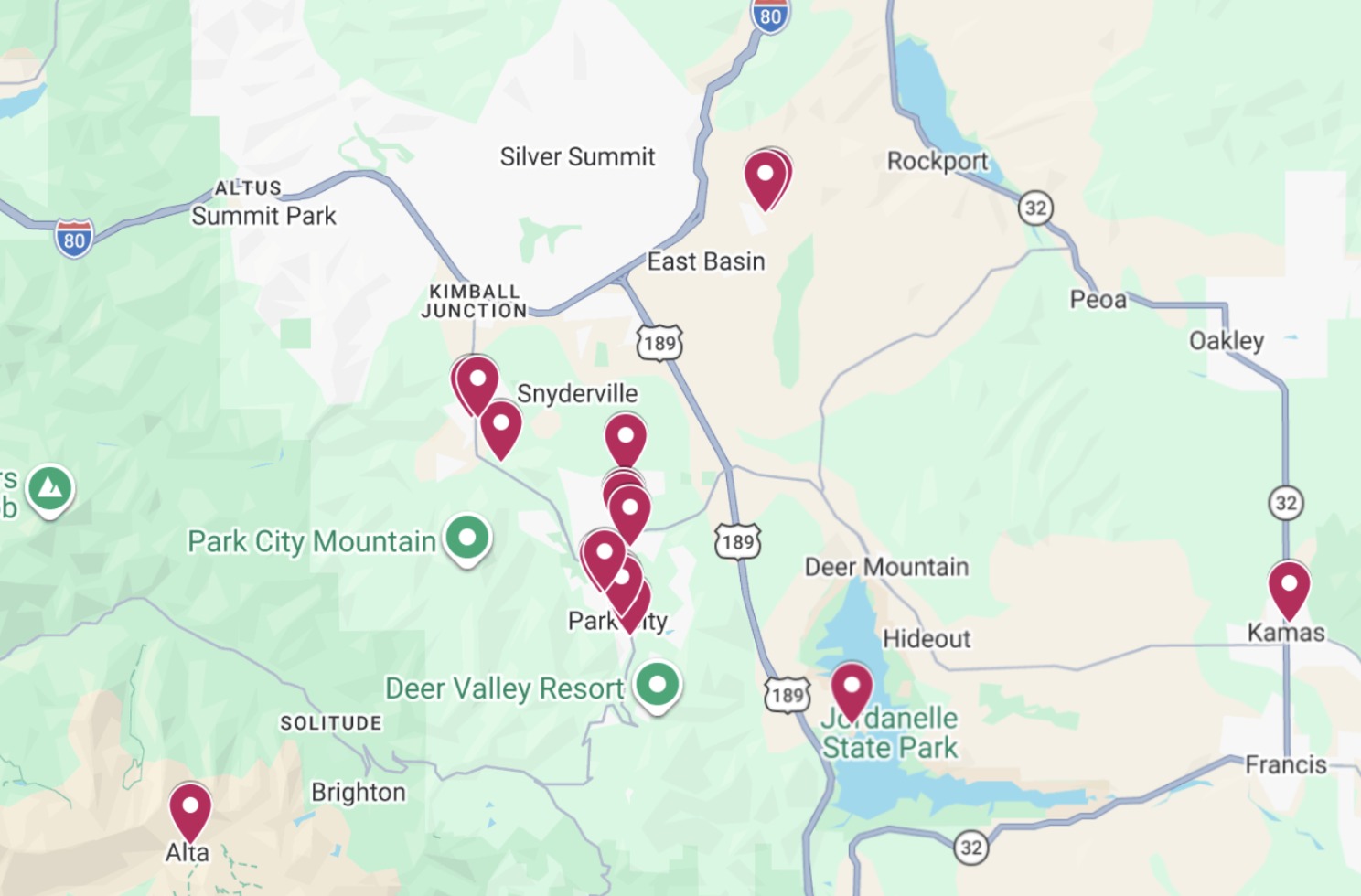
A map of Park City Opera’s performance venues from June 2024 through March 2026.
There is, of course, a reasonable objection to found-space performing: it doesn’t scale without compromise. Site-specific work is beautiful but poses limitations. Sometimes (like for our upcoming production of Roméo et Juliette at the Eccles Center in August 2026) we too choose a traditional theater. Concert halls and traditional theaters aren’t bad choices, but they shouldn't be the default.
The Palais Garnier was a deliberate and striking choice, built to make a specific argument about what opera was and who it belonged to in 1875. We too are deliberate and opinionated when we choose every performance venue for Park City Opera, and our sincere hope is that this is reflected in the experience our audiences have. Our events are designed to welcome people in – across backgrounds, across familiarity with the art form – and to create a space where gathering around music feels natural, shared, and alive.